It’s happening in Southampton. Plus: the secret story of Round Swamp Farm, a Wolffer Harvest Party scene report, and the “Buddha Estate” for sale in Bridgehampton.
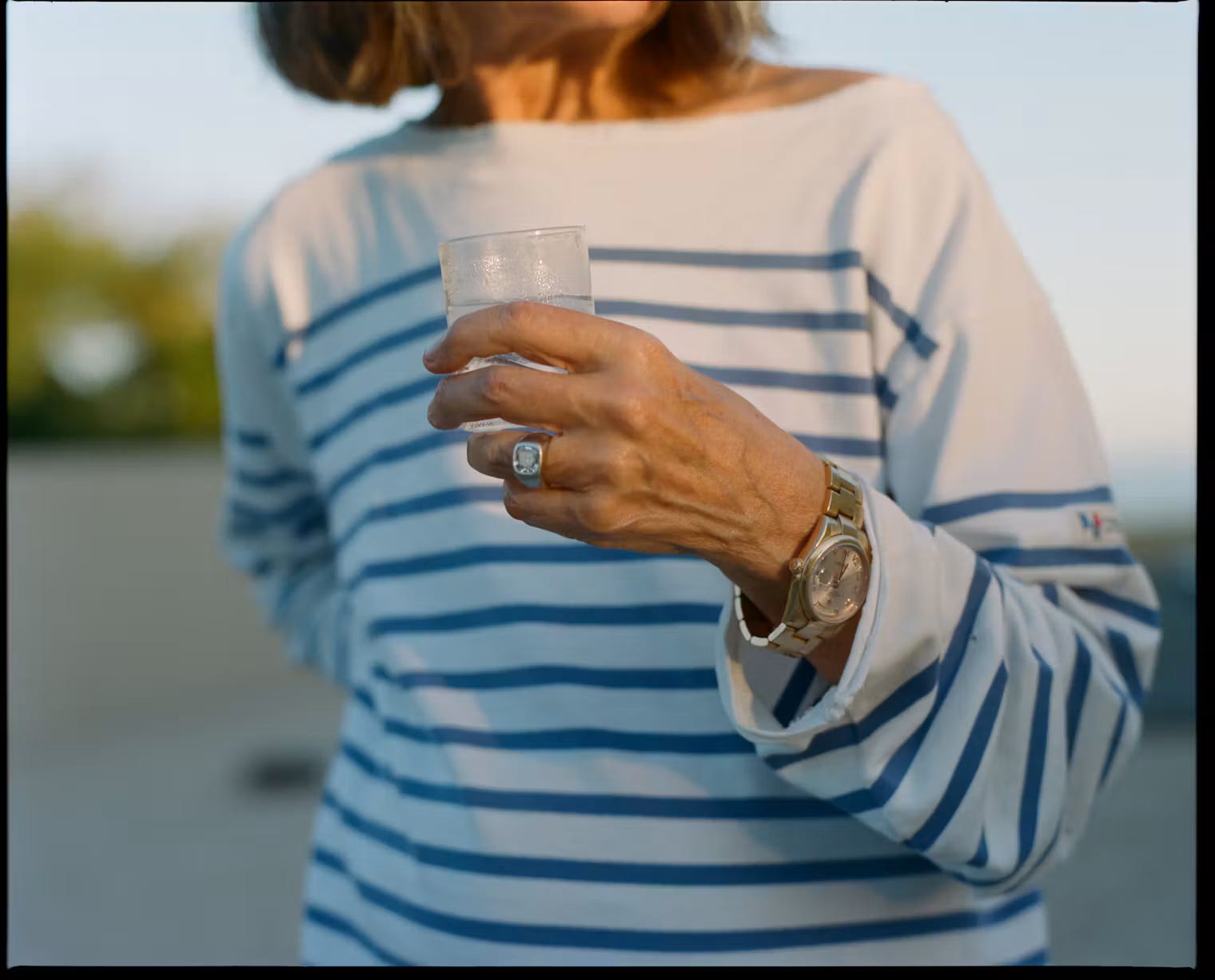
An astounding number of people came up to me at Wölffer Estate Vineyard’s Harvest Party this weekend to say, “This is my favorite day of the year.” It certainly is Disneyland for a certain subset of Hamptonites, who pay $205 a ticket ($105 for kids) for an all-you-can-eat, all-you-can-drink extravaganza at the vineyard. Thirty-five years after it was started by the vineyard’s late founder Christian Wölffer, it’s grown from 30 people casually celebrating newly fermented wine to 1700 guests at a massive, sold-out, all-ages party in the vineyard. Kids frolic in foam puffs that come out of a contraption built by a Wölffer winemaker. Tiny boys squash grapes in lederhosen. Fancy moms with Cartier arm parties loop the property on a hayride.
Joey Wölffer, Christian’s daughter and one of the co-owners of the famous vineyard, said, “This is the real Hamptons.” There are no step-and-repeats. Your shoes get destroyed. Everyone eats. Joey, a beloved local equestrian, businesswoman, and social fixture, has lived on the East End since she asked for diamond earrings as a nine-year-old in Manhattan. Her mom took it as a sign that they should move to the country.
I had another “real Hamptons” experience this weekend at a Shelter Island tag sale in the former Gardiner’s Bay clubhouse. In general, WASPs have the worst furniture, and the bigger the house, the more likely the estate sale is to hawk dusty Tide detergent and half-drunk bottles of booze. So when White Flower listed the Dering Harbor tag sale, I was dubious—as it turns out, the correct response. However, as estate-sale warriors we must do our due diligence. After all, I scored a trove of D. Porthault in the same neighborhood less than a year ago. The home, which was recently sold to a rich guy for his niece, was in shocking disrepair. I did appreciate the laminated guides in the laundry room for which linens go on which beds.
(Good time to plug photographer Theo Wenner’s “Jane”—about his mom, Amagansett queen Jane Wenner—with its glimpse of her impressive laundry room.)
From “Jane,” by Theo Wenner
In today’s free newsletter, a look at the $43 carton of eggs that has a wait list in Southampton; a unique “Temple Estate” for sale in Bridgehampton; and an interview with the director of the Round Swamp Farm documentary everyone’s been talking about since the Hamptons International Film Festival.
This issue of THC is free! But the next one won’t be. Consider joining the club to get an all-access pass to our delicious reporting.
Invasion of the Luxury Eggs
Now that regular old cartons of eggs regularly go for well over $10, an upper echelon of eggs has emerged in The Hamptons
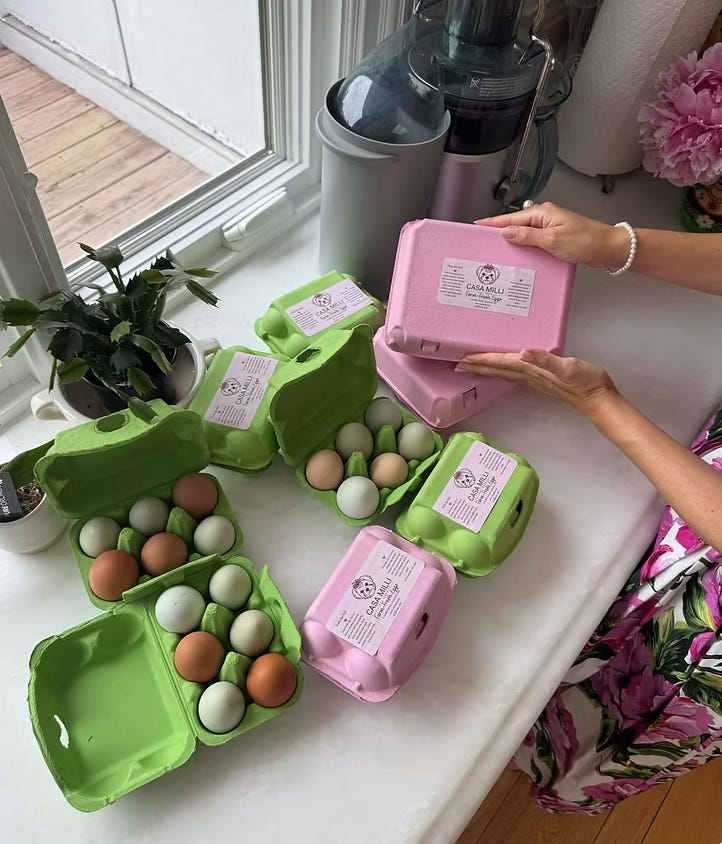
At El Farm Market in Southampton, there’s a wait list for $43-a-dozen eggs from Casa Milli in Connecticut. (El Farm confirmed that the eggs are hotly in demand.) Casa Milli founder Amee Liliana’s naturally colored eggs come from a chicken coop with a chandelier and disco ball, and her chickens are named Cher, Oprah, and Grace Kelly. Liliana told me, “I think people initially notice them because they’re beautiful. Every dozen is a different mix of naturally occurring shades of blue, green, cream and brown, so there’s something almost jewel-like about opening the carton.”
As to why the eggs deserve an eye-popping $43 price tag, Liliana says, “For me, it begins with the way the hens are raised and cared for. Their well-being is incredibly important to me. They eat organic feed supplemented with herbs and produce from the garden, and there is a tremendous amount of attention behind their care.”
Seven-Million-Dollar Spirituality
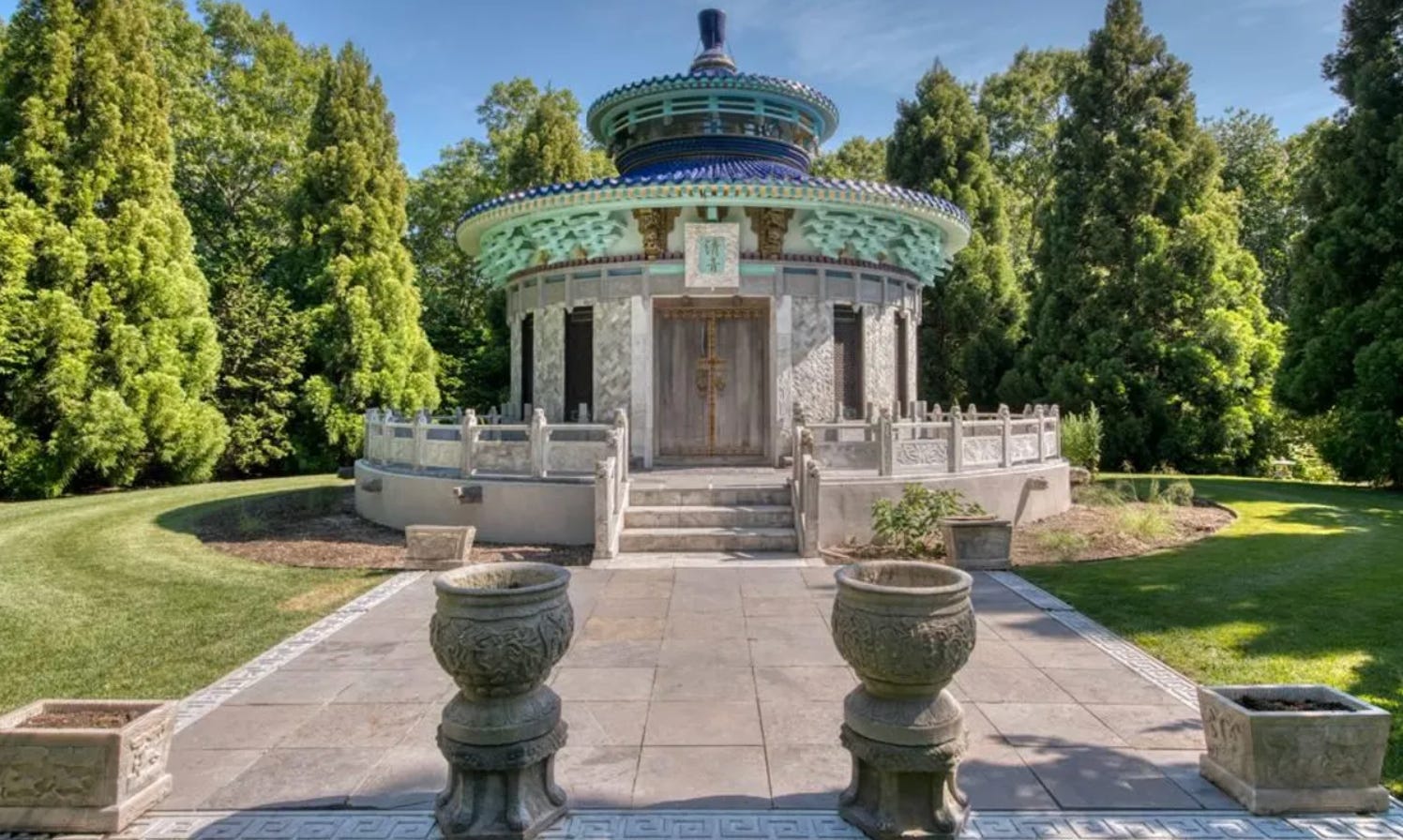
The “Temple Estate,” a Bridgehampton home complete with a replica of a 15th-century Buddhist temple, is on the market for $7.5 million.
Owned by Manhattan gastroenterologist and gut guru Dr. Roshini Raj, who bought the house in 2022 for $3.95 million and says she put $3 million into it, the property also has a lagoon pool, fairytale bridge, sauna, and koi ponds. The temple was built by a previous owner with East Asian influences, and Dr. Raj has updated it to reflect her Sri Lankan heritage. Listing agent Mala Sander of Corcoran says that she could see it being a dream writer’s retreat.
Behind the Muffins: The Secret History of Round Swamp
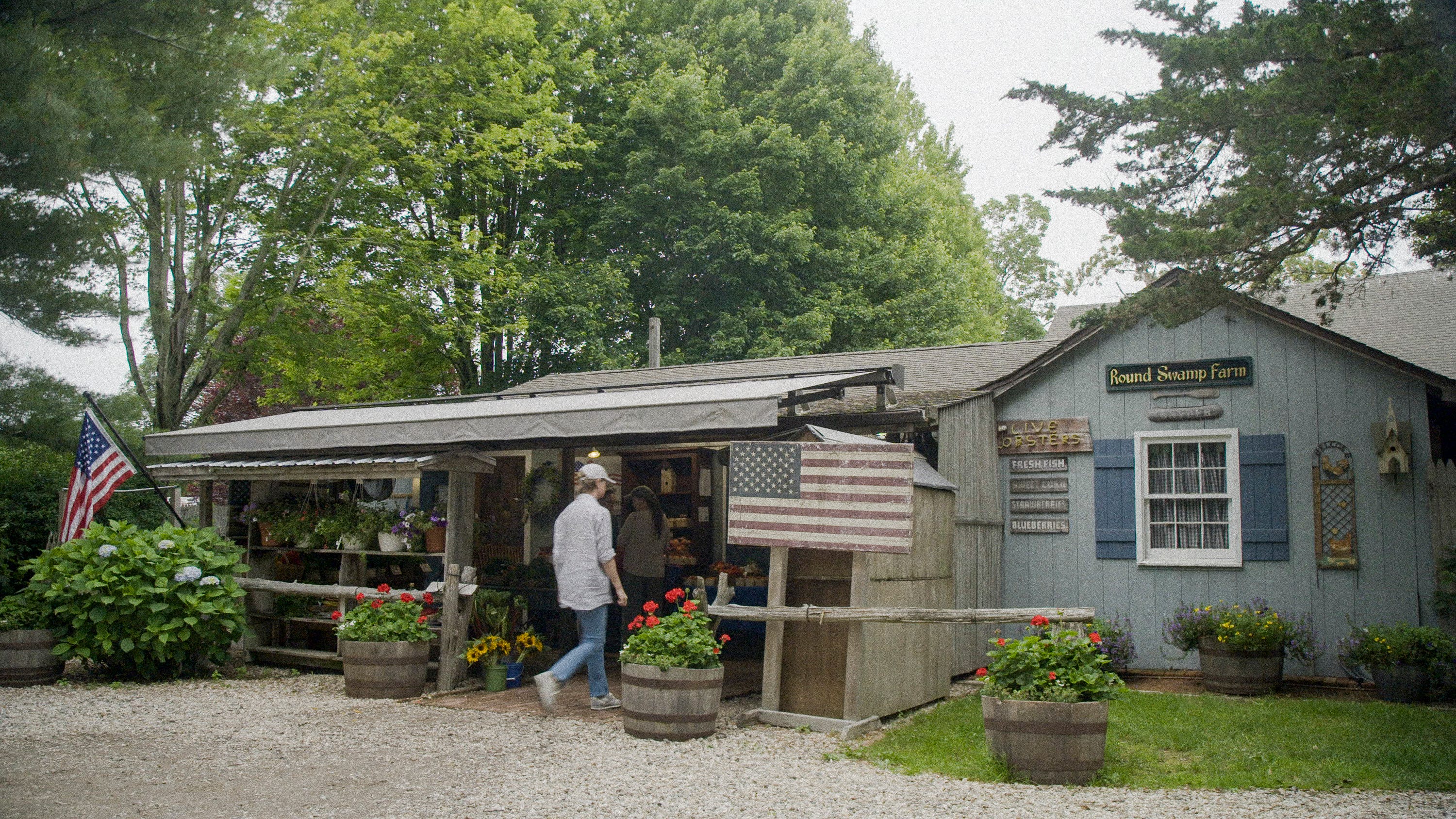
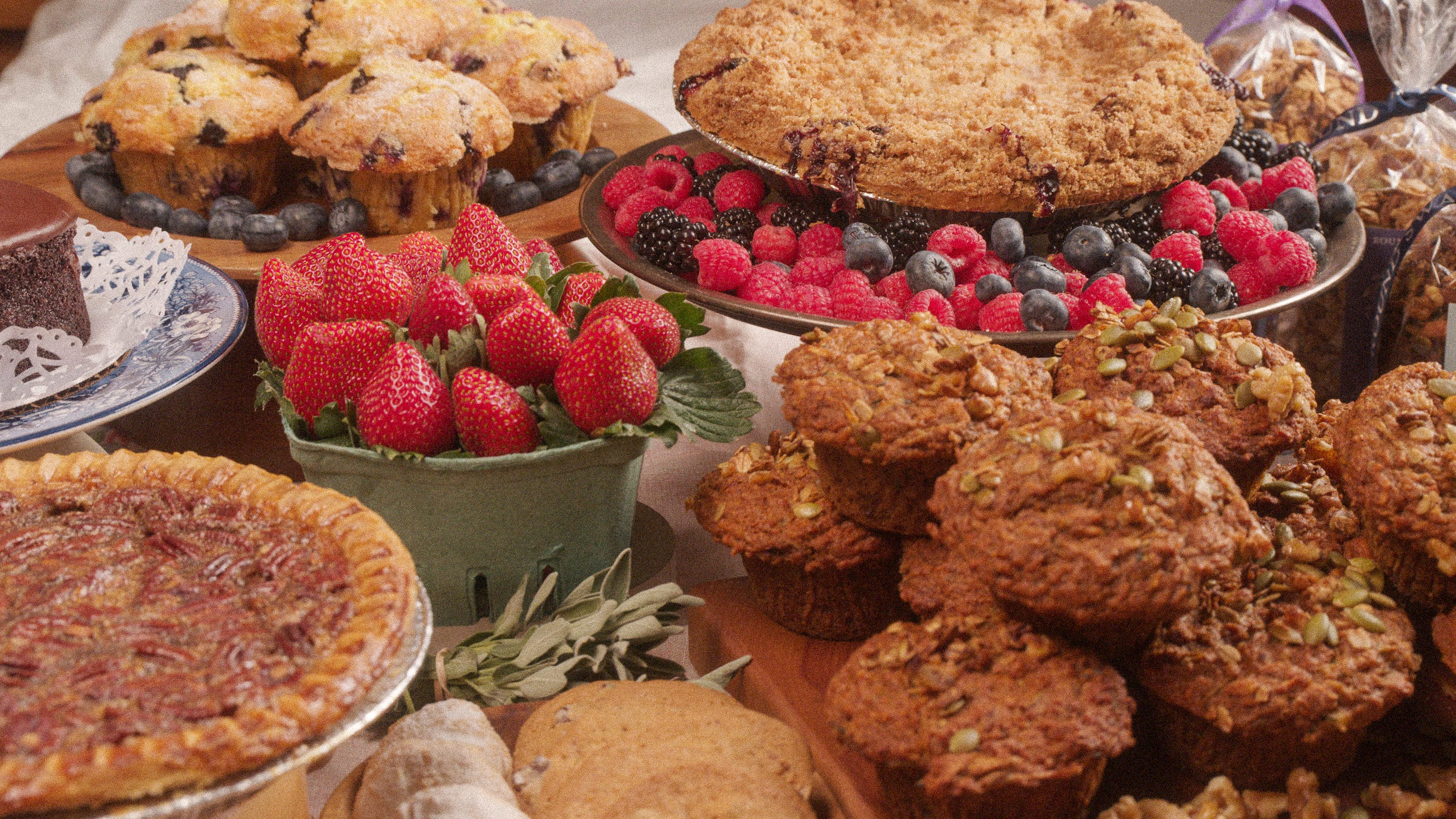
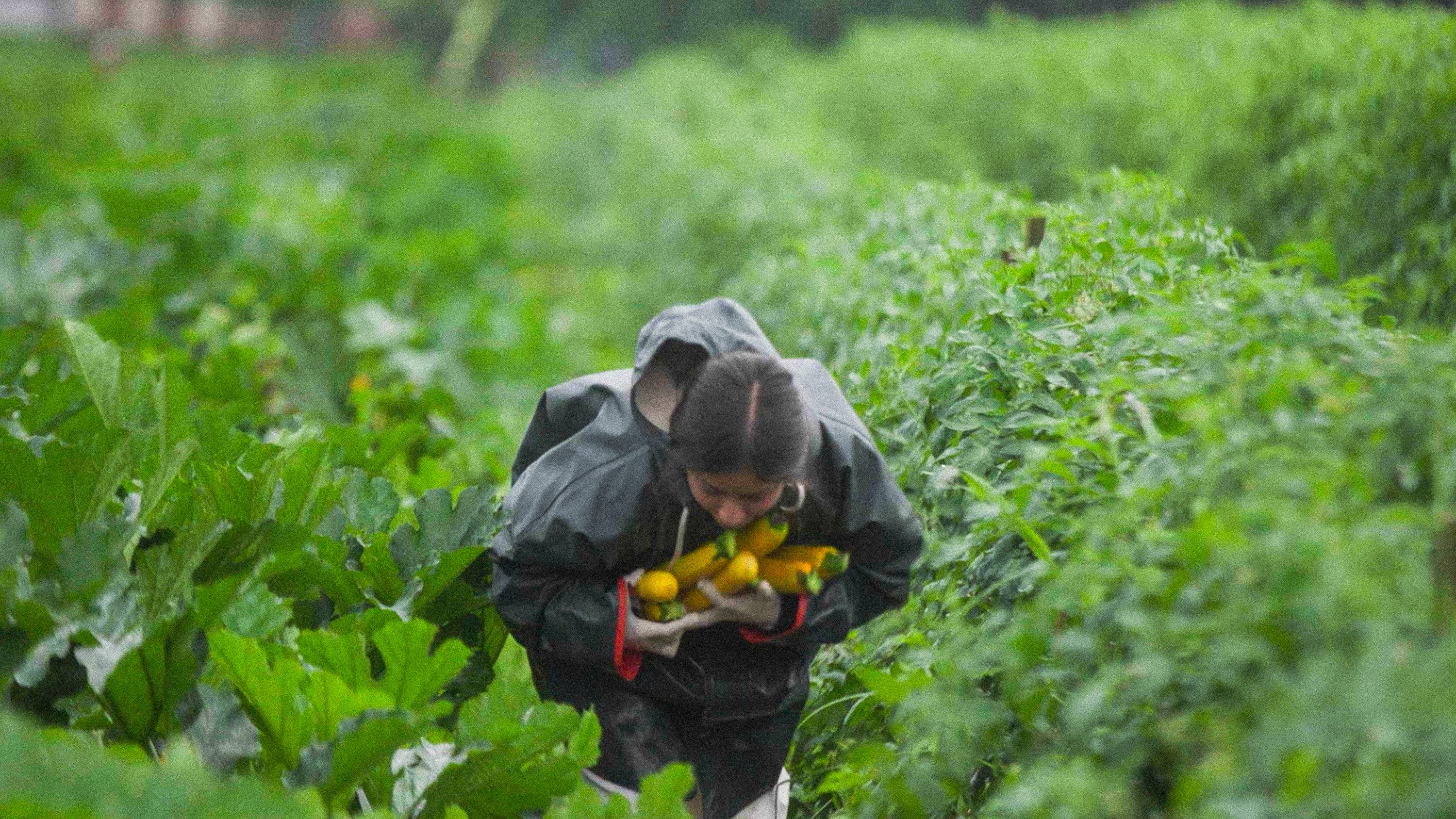
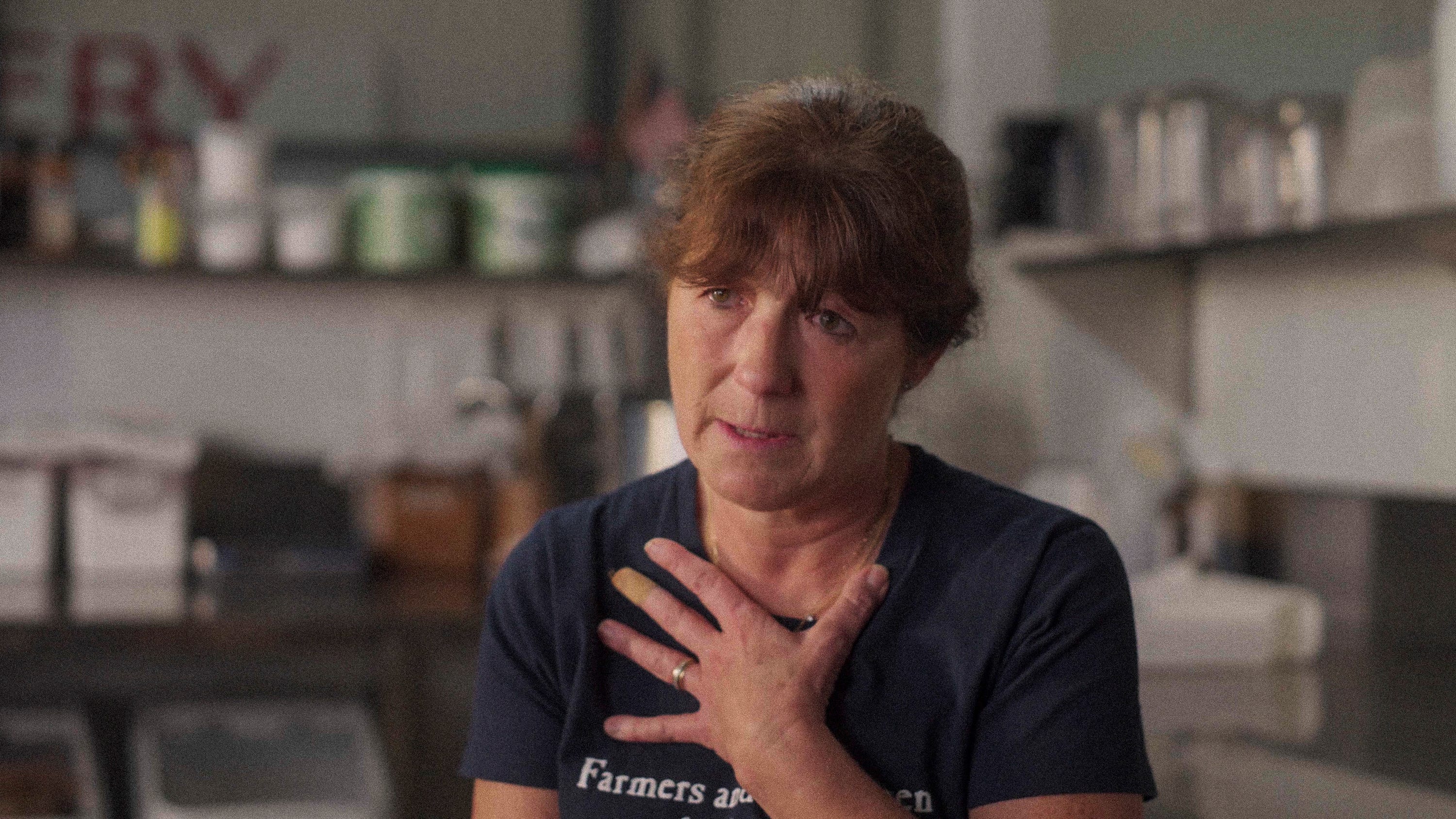
One of the surprise hits of the Hamptons International Film Festival was an unassuming short about the family-run Round Swamp Farm. Better known today as the Instagram-friendly snack factory where influencers run up multi-thousand-dollar tabs, Round Swamp was started by Carolyn Saunders in 1966 as a humble table on her father’s farm. Carolyn, now the matriarch of the sprawling family-run business, appears alongside her children and grandchildren in a new documentary by Leslye Davis, who started as a video journalist at The New York Times. The film shows the back-breaking work of the Snyder-Niggles family, particularly Carolyn’s daughter Lisa Niggles, who wakes up at 1:30 a.m. and personally touches every muffin that goes out the door of the three locations. The film tracks the farm’s evolution from a simple farm stand into a gourmet food emporium where billionaires shop for three meals a day. Given the huge clout that Round Swamp has accrued, it’s fair to ask whether the family would unload the business. But as Lisa’s husband, Charles Niggles says, “If you sell it, then that’s all you have, is money.” I interviewed Davis, who didn’t have a connection to The Hamptons before she started making this film three years ago, about the project:
What drew you to the story of Round Swamp Farm?
Our executive producer, Alice Shure, had the idea to capture the farm as she remembered it, juxtaposed against the success and social media phenomenon it has become. I think she wanted to preserve a record of Long Island’s farming heritage. She has a home in Sagaponack and has been a devoted patron of the stores for years. She approached Patricia Burke, one of her closest friends, about making the film, and together they went to Wendy Roth at The Documentary Group.
I’d made my last feature at The Documentary Group, and they were looking for a sensitive director/cinematographer who would be excited to spend time on a farm. I was skeptical at first. I’d never heard of Round Swamp Farm. But then I met the family, and they reminded me of my own farming family back in Kentucky, even though their circumstances were very different. I was drawn to how much of their lives they devoted to continuing to farm and preserving traditions in a place that had changed dramatically around them.
I was also fascinated by the extraordinary wealth surrounding the farm and the family’s complicated place within it. Their success is bound up with that world, even as the farm represents something people feel is disappearing from the area. Some customers seemed drawn to its products as a way to signal wealth or status. I wanted to understand what happens when a family business becomes that kind of phenomenon: what success makes possible, what it demands, and how it changes the place people were drawn to in the first place.
How did the Niggles/Snyder family respond when you first brought this idea to them?
They are all very private, and building trust took significant time and many conversations.
What does the specific story of Round Swamp reveal about larger phenomena in this area?
Much of my work, including my last film, explores questions around the American Dream. Round Swamp Farm interested me as a story about what happens when hard work brings success, but the work keeps expanding. How much room is left for the life you’ve worked so hard to build? What do you choose to preserve, and what becomes harder to sustain?
The family’s attachment to the farm runs deep, and sustaining it requires tremendous personal sacrifice. They also have considerable advantages: an established business and land in an extraordinarily wealthy place. That success allows them to provide opportunities for first-generation Americans seeking to build a good life, whose work, in turn, makes the farm’s continued success possible.
The majority of Round Swamp’s staff members are Ecuadorian, and some commute hours each day. I hope audiences notice their skill, their relationships, and the sacrifices they make in pursuit of their own aspirations. For me, these interconnected stories speak to the larger question of what the American Dream looks like today.
Lisa Niggles is such a compelling character. Did you always know she would be the protagonist of sorts?
Lisa emerged as a kind of gravitational center, the person at the heart of the perfectionism people associate with Round Swamp Farm. She’s an obsessive. An insomniac. One of those chefs who’s never dull to watch at work. She’s inspired an extraordinary level of devotion among customers, whether she likes it or not! I was drawn to her exacting standards and to the question of what it takes to keep meeting them, especially when people’s expectations keep growing.
What do you predict is the future of Round Swamp?
I would need about 40 minutes and 25,000 words to express the nuance and range of my prediction. The best I can do is reflected in the film! I know the family cares tremendously about carrying forward the farm’s legacy and traditions, and about their role in the community. They’ve built something very successful. I think the question is how they carry it forward in a way that also leaves room for their own lives, and for the lives of the people whose work makes it possible. It’s hard to imagine the farm’s future without those questions.
What’s your personal favorite Round Swamp item?
Hard question! I have a massive sweet tooth, so Lisa’s cookies, of course. Which cookie depends on the day. Dianna’s Zucchini Bread. I once ate an entire Shelly’s key lime pie in one sitting. And of course, Claire’s banana bread.
What’s next for this film and how can people watch it in the future?
We are trying to figure this out post HIFF. There’s a chance that with the right support and the family’s willingness, we could make a feature that tells the larger/deeper story. But as it stands, we are open to distribution now, and I encourage anyone with a distribution plan to reach out to my partners at The Documentary Group.
If you know someone who would like The Hamptons Chronicle, please share it with them! Support local news. 💙







We are huge fans of Round Swamp (EH) and the good people who run it. The food is delicious and the lines move quickly.
A part of me knew that Dering Harbor sale was going to be a bust, so thank you for your report! I was a tiny bit worried I’d miss some special thing 😅